The Platform
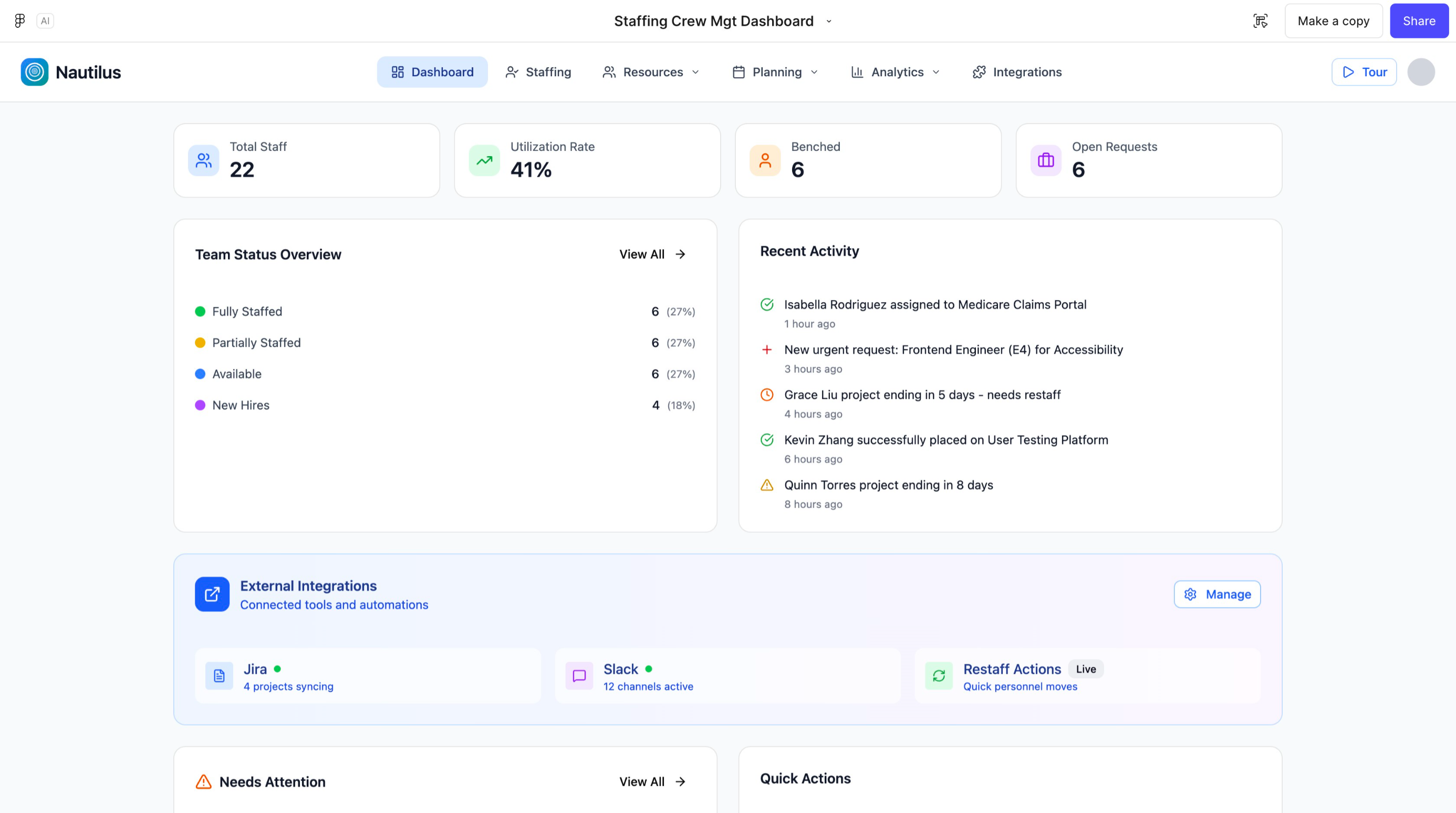
Nautilus transforms staffing from a manual, time-consuming process into an intelligent, data-driven workflow.


The Challenge
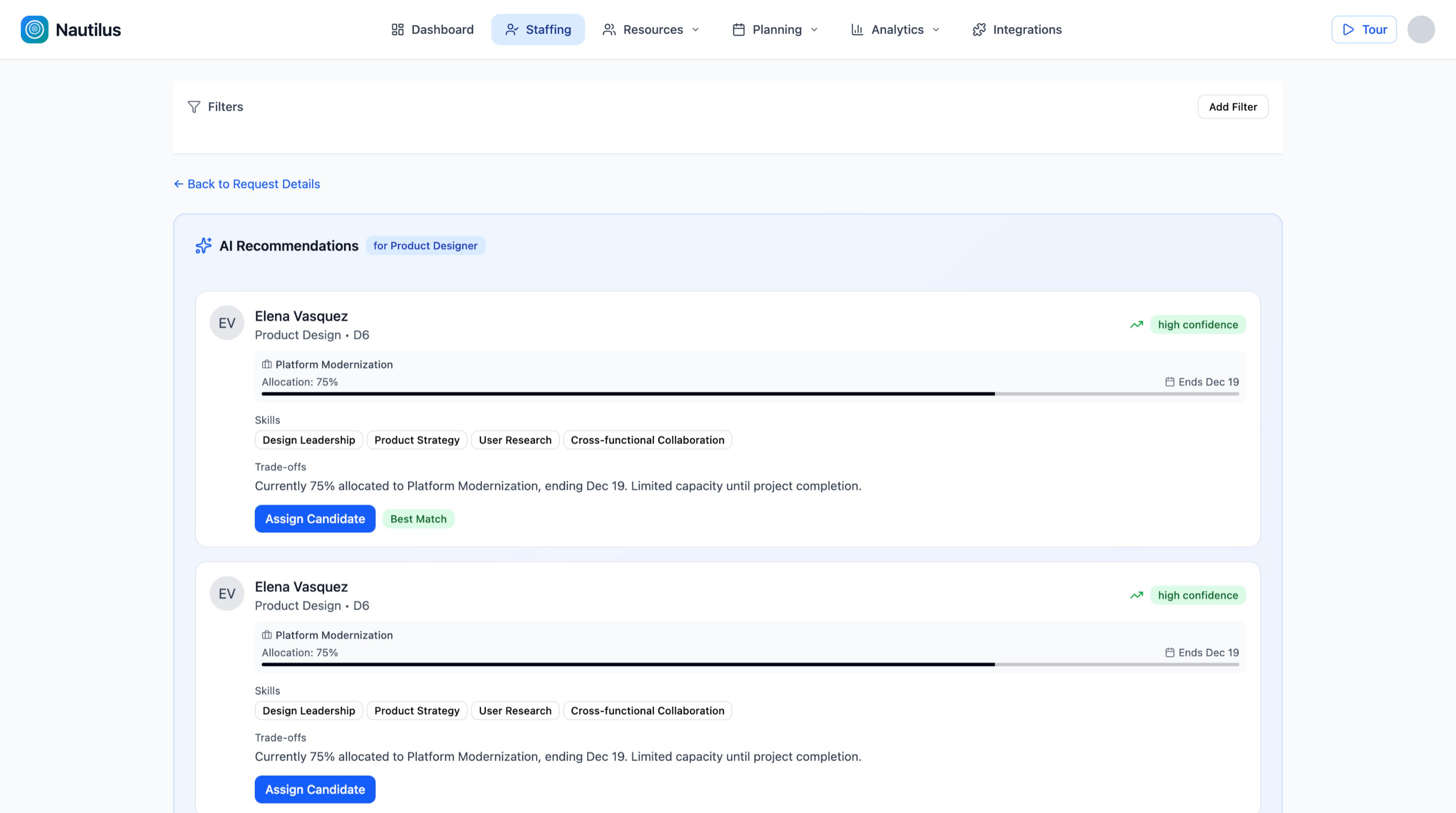
The problem of staffing cross-functional teams in large delivery organizations is notoriously chaotic. Leaders spend hours manually hunting through spreadsheets, Slack threads, and tribal knowledge trying to answer basic questions: Who's available? Who has the right skills? What happens if we move this person to that project?
Traditional approaches rely on:
- Static spreadsheets that are outdated the moment they're created
- Manual searching through organizational charts
- Gut decisions without data on trade-offs
- Reactive firefighting instead of proactive planning
For delivery leaders managing dozens of projects across Design, Engineering, Product, and Program Management disciplines, this creates a constant staffing bottleneck that delays projects and burns out talent.
The Idea
I designed Nautilus as a working prototype intended to sit alongside existing staffing systems, not replace them. Inspired by airline and maritime crew management software, the project explored how delivery organizations could make staffing decisions visible, comparable, and auditable using the data they already had.
- Translated crew management concepts into a staffing model for cross-functional delivery teams
- Defined the data structures for skills, availability, role constraints, and assignments
- Designed decision and comparison surfaces that expose tradeoffs leaders already navigate informally
- Used AI-assisted development to rapidly prototype backend logic, interfaces, and workflows
The goal was to test how far existing staffing judgment could be externalized into a shared decision surface without reengineering the organization.
Technical Approach
- Supabase for structured data and serverless logic
- React and TypeScript for the client application
- AI tooling used to accelerate prototyping and iteration
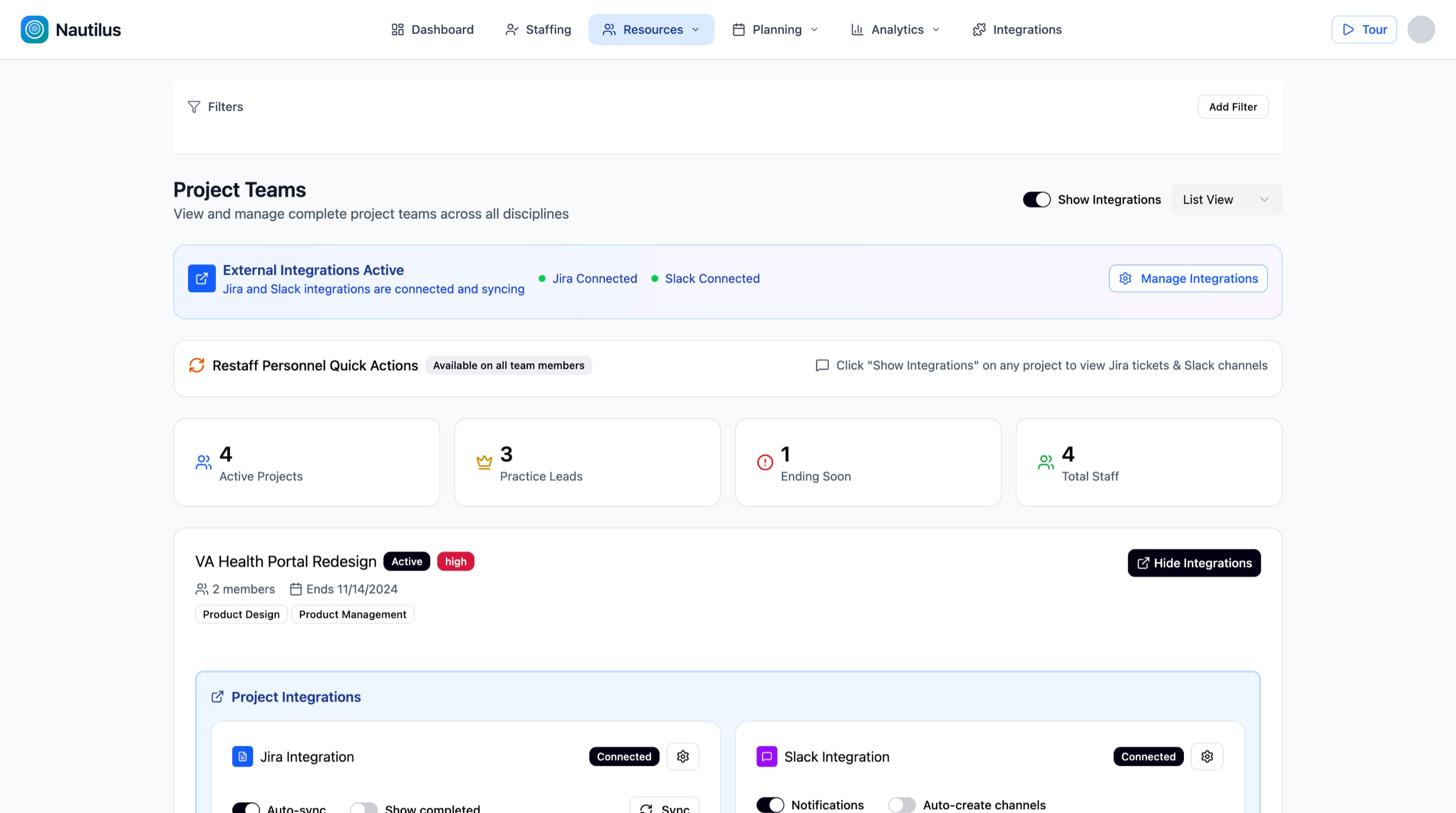
- Lightweight integrations with Jira and Slack to mirror real workflows